
For generations, the communities of Nagaland have been guardians of a remarkable ecological heritage – rich biodiversity, indigenous knowledge on food and farming systems, passed down and adapted across centuries. For the people of this land, farming was never just about survival. It was, and remains, the foundation of identity.
That foundation is under strain. Ecosystem degradation, falling soil fertility, and water scarcity are no longer distant risks but are everyday realities. Indigenous lands are shifting toward monocultures like oil palm and rubber, a change that is driving a “feminisation of agriculture,” where women carry more of the labour even as their access to and use of the land is shrinking. Traditional seeds are being replaced by market varieties, and chemical inputs are edging out natural ones. Piece by piece, food sovereignty is eroding.
As youth drift away from farming, they also drift away from the values that came with it – reciprocity, respect, and dignity of labour.
The Path Forward
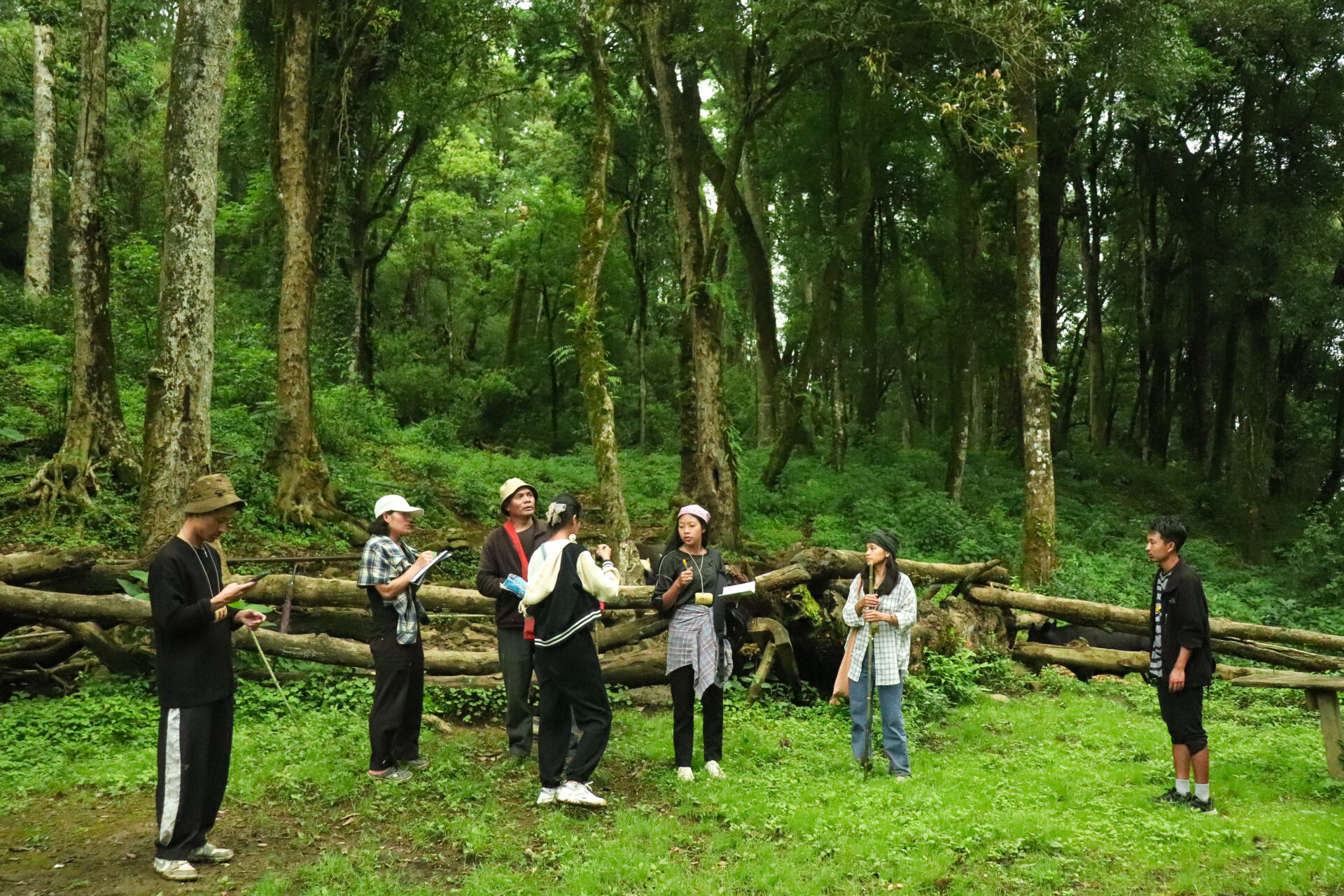
North East Network launched the NEN Farm School in 2016 in Chizami, Phek district, under the theme “Bridging the Farm-to-Plate Gap.” The Farm School was created to reconnect young people with local food systems, farming practices, culture and the environment.
Over the years, the Farm School has evolved to reach different groups of young people and respond to changing contexts. The Annual NEN Farm School, which has been running since 2016, focuses on engaging college students, while NEN Farm School 2.0, introduced in 2024, focuses specifically on unemployed youth in the region.
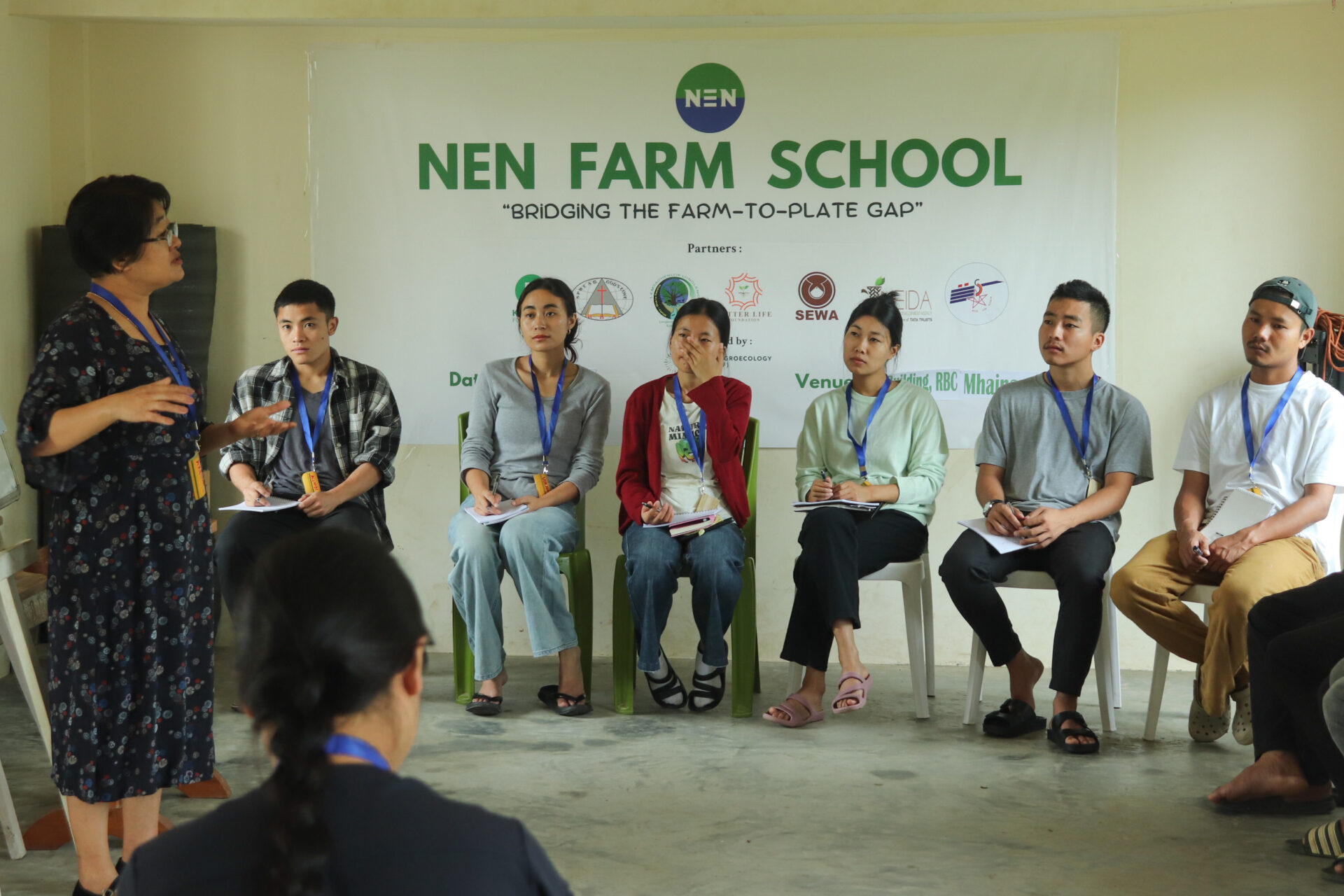
What began as a small initiative has today grown into a collective movement — the Farm School now spans multiple districts, working with youth aged 18-35.
Our vision is a future where Nagaland’s youth are not just participants in agriculture, but stewards of leading sustainable, land-based livelihoods that strengthen both environment and economy.
How It Works
Building the Foundation through NFS 2.0: Seven Districts, One Movement
Between February and July 2025, NEN and partner organisations delivered intensive five-day Foundational Courses across seven districts of Nagaland (Phek, Tseminyu, Peren, Noklak, Shamator, Longleng, Tuensang, and Kiphire) in collaboration with local partners deeply rooted in each community, from the Kenono Foundation’s conservation hub near Nsonji Lake to SEWA Shamator’s work with women’s collectives.
146 youth (84 male, 62 female) took part, learning across a wide curriculum: seed systems, soil health, water, gender equity, indigenous land management, food and nutrition, biodiversity, climate adaptation, and livelihood value-addition.
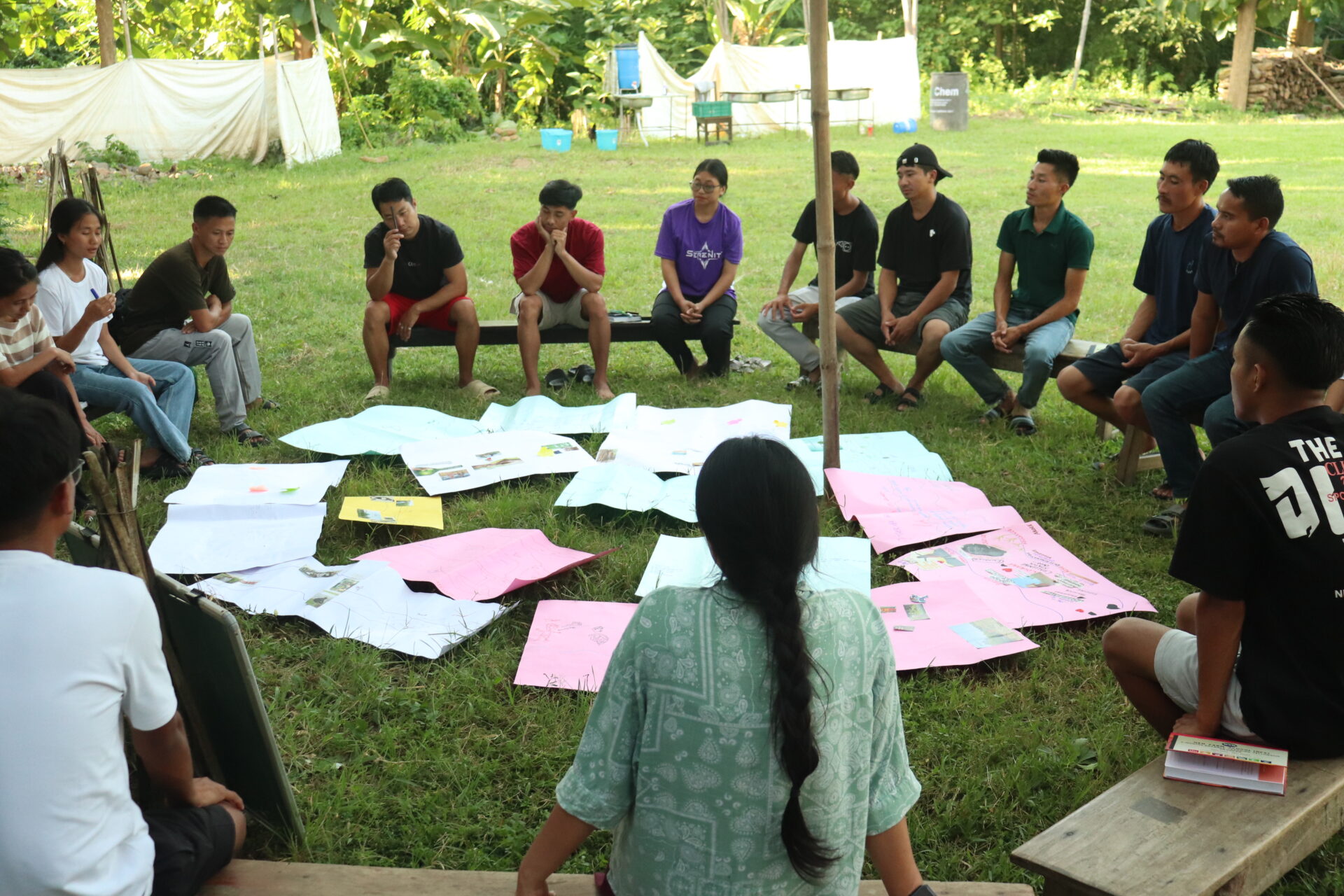
The results were immediate and tangible. Within months, participants had turned learning into action: establishing keyhole gardens, tree nurseries, mushroom units, beekeeping, fishery ponds, food processing units, and poultry enterprises, grounded in resource mapping and Diet Diversity Surveys across their villages.
The Advanced Learning Fellowship — Six Months, Three Modules
From this foundation, 17 young leaders were selected through partner recommendations and interviews to move into a six-month Advanced Learning Fellowship (October 2025 – March 2026), supported by a monthly stipend and a network of facilitators, mentors, and outside experts.
The Fellowship’s learning rhythm was anchored by two recurring touchpoints that kept participants connected between in-person sessions:
- Technical Learning Tuesdays: Weekly sessions for deep dives into the technical and practical skills each module demanded
- Expert Fridays: Fortnightly sessions with practitioners and specialists, bridging classroom learning with real-world, on-the-ground insight
Around this rhythm, the Fellowship unfolded across three modules:
Module 1 — Farming
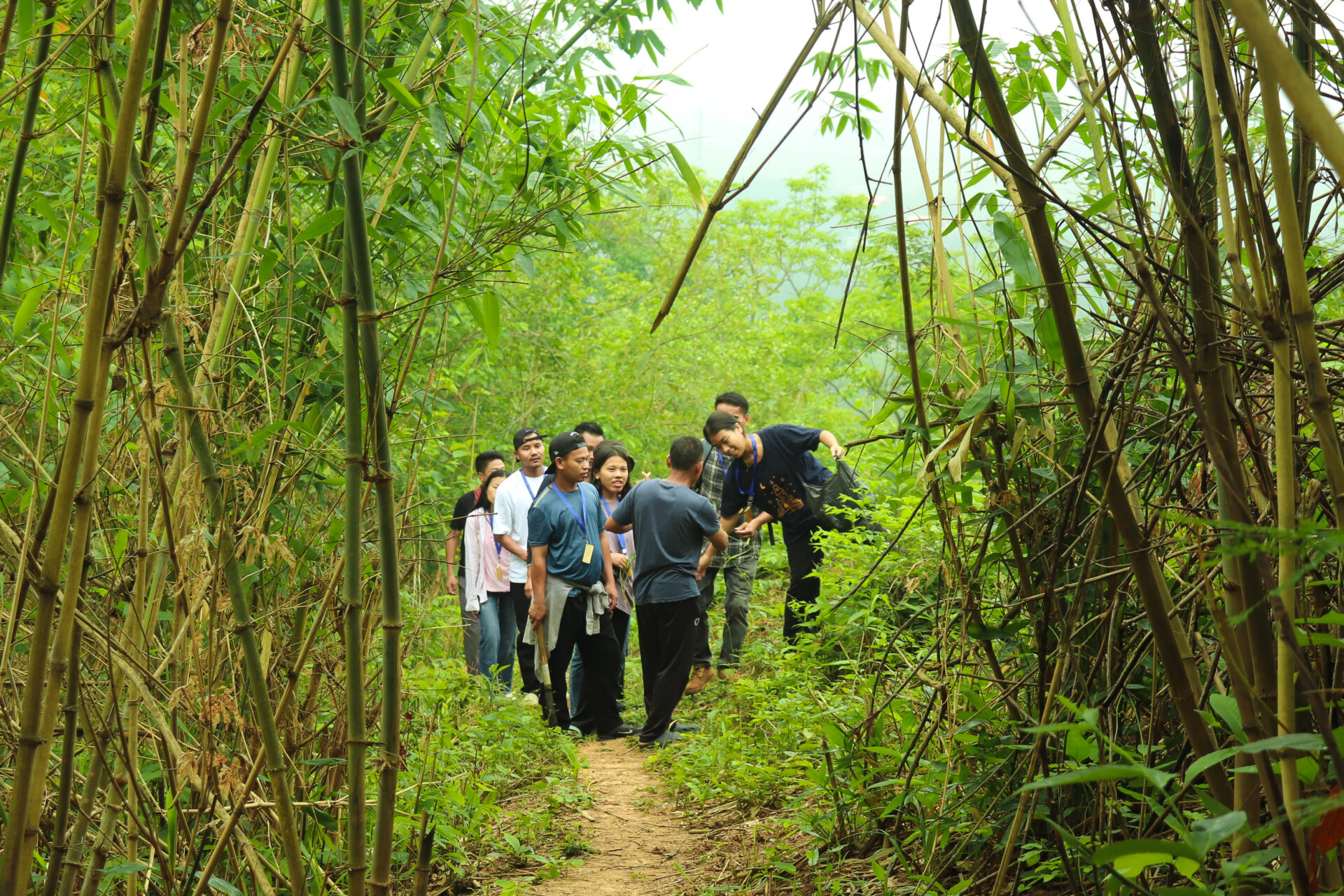
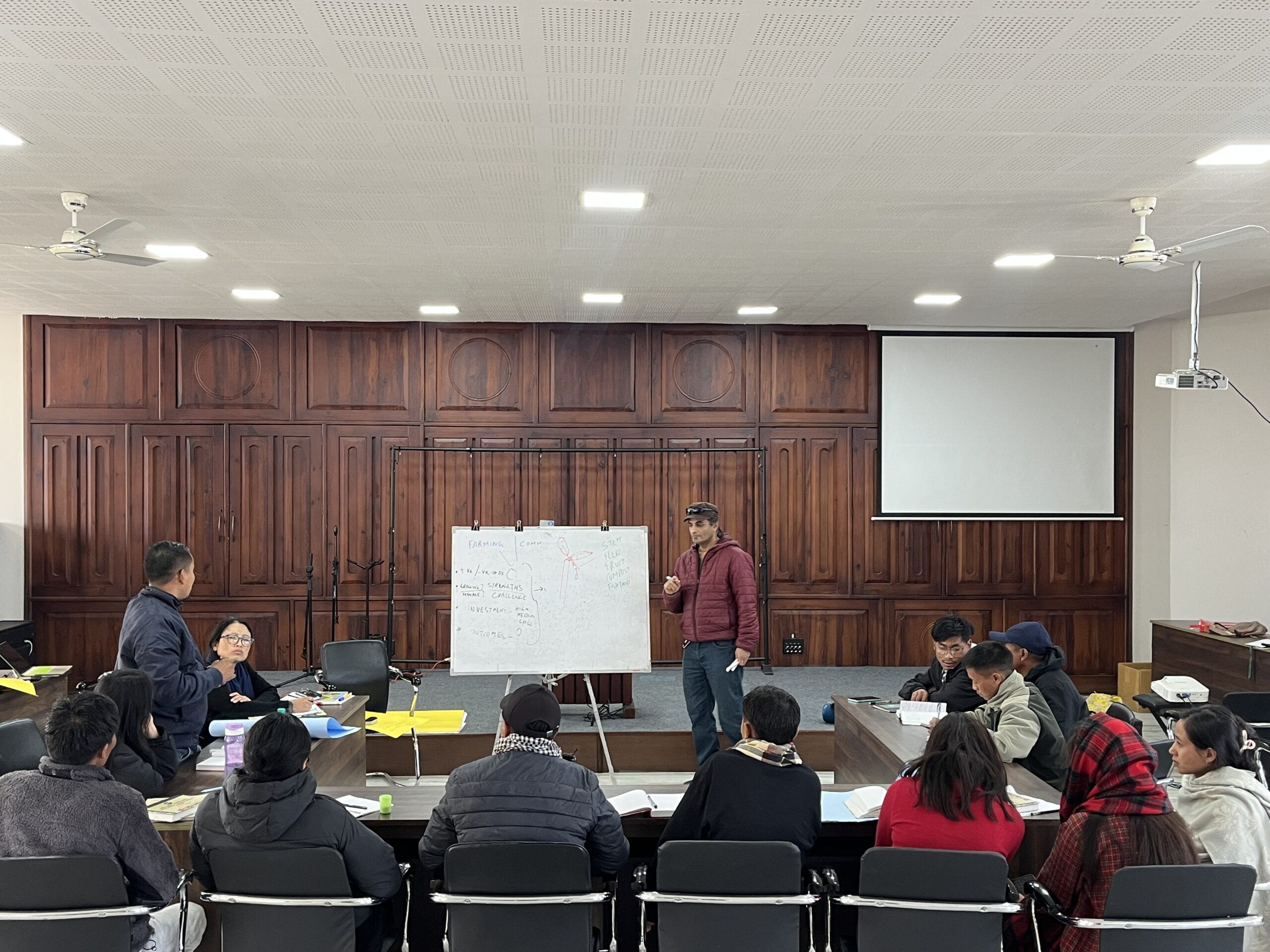
Participants built their foundation in agroecology through a four-day Farming Bootcamp in Peren district, hosted by the Rongmei Baptist Association. The bootcamp took participants from reflecting on their own journeys, to comparing biodiversity-rich jhum fields against industrial oil palm plantations, to confronting how gender and identity shape access to resources through a “Privilege Walk” exercise. They conducted Diet Diversity Surveys across 50 households each, mapped community resources, and documented local seed systems; skills they carried home to launch community nurseries, edible school gardens, cardamom farms, and apiaries.
Module 2 — Community
This module shifted the participants from individual practitioners to community leaders. Held online across two days in December 2025, it began with an “inner journey” of leadership, self-awareness, Non-Violent Communication, and a framework of “Power To, With, and Within” that favoured collaborative influence over top-down authority. Participants then turned outward: stakeholder mapping, storytelling as a development tool, and the 5Ws-and-1H framework to design real interventions in their own villages: from community nurseries and kitchen gardens to biodiversity walks and awareness workshops with elders and peers.
Module 3 — Entrepreneurship
Held over three days in Kohima in January 2026, this module guided the participants from farmer to founder. They were introduced to the “8 Forms of Capital”, a model of wealth that goes beyond money to include social, cultural, and ecological value, and the “4 Ps”: Purpose, People, Planet, and Profit. Using the Lean Business Canvas, they built out cost structures and revenue models for their own ventures, while experts briefed them on branding, compliance (FSSAI, Udyam, ZED certifications), and financial management. From here, real businesses took shape: mushroom units, perilla oil, millet products, natural fibre textiles, and farm-to-table ventures.
The Showcase: NEN Biodiversity Festival
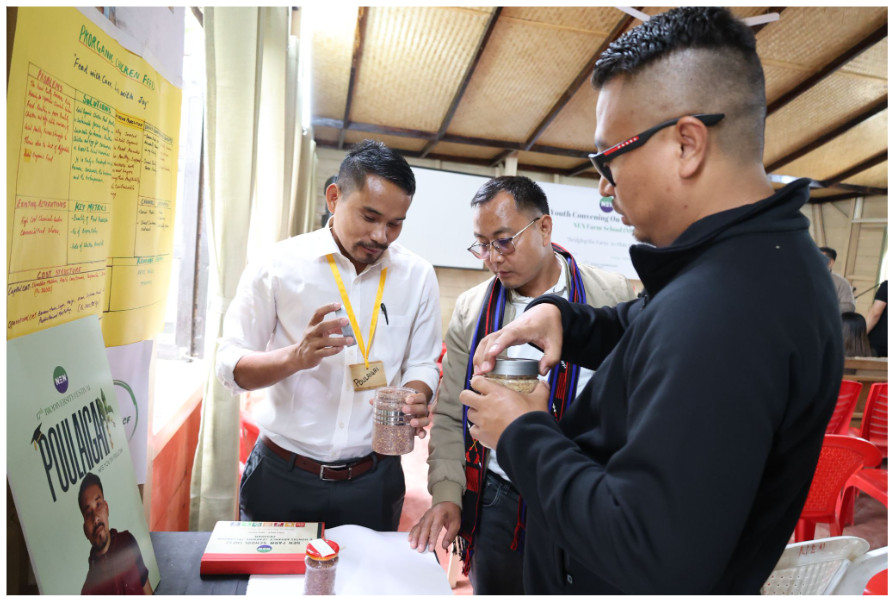
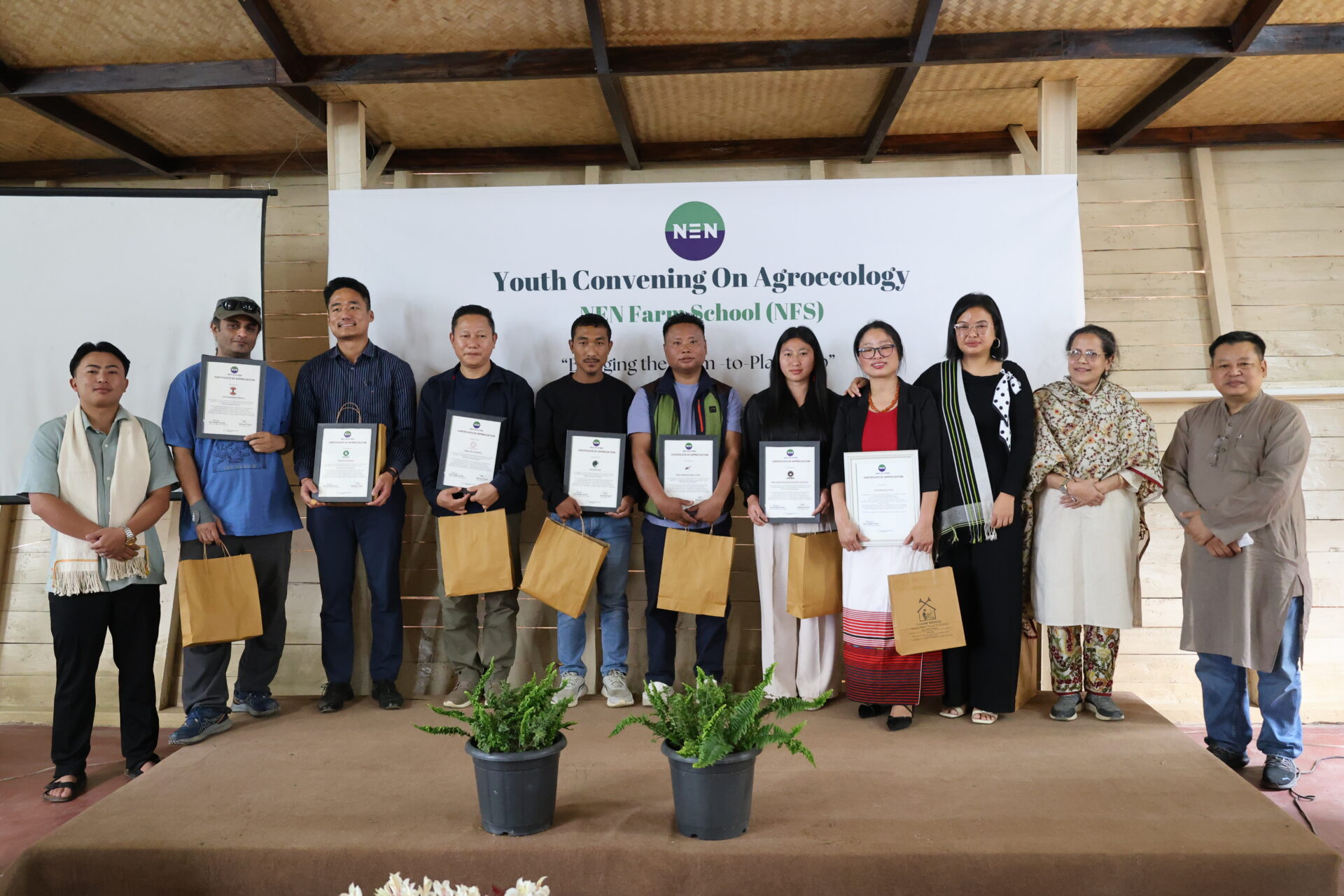
The Fellowship reached its peak at the NEN Biodiversity Festival (11–12 March 2026), a two-day convening that brought together participants, partners, community leaders, and investors under one roof. This is where the six months of learning became visible:
- The Enterprise Pitch: Participants presented their business models to partners and potential investors, stepping into the market as social entrepreneurs, with support to help launch their ventures.
- The Graduation: Participants were recognised not as trainees, but as agroecological practitioners and community leaders in their own right, bridging indigenous knowledge with modern innovation
For many, the Festival was more than a closing ceremony. It was a youth convention in its own right, a gathering of young people from across Nagaland’s districts and tribes, proof that a shared commitment to the land could bring together communities that might otherwise never have shared a room.
What Came Out of It
- 7 districts reached through Foundational Courses, in partnership with 7 community-rooted organisations
- 146 youth trained in agroecology fundamentals, with 62 young women among them
- 17 Advance Learning Participants completed the full six-month Advanced Learning Fellowship
- Dozens of on-the-ground initiatives launched: keyhole gardens, tree nurseries, fishery ponds, beekeeping units, mushroom cultivation, poultry and piggery enterprises, and community seed documentation
- New social enterprises taking root: Mushroom units, Poultry, Perilla oil, Natural fibre textiles
- A genuine bridge across tribes and districts, built through shared learning and a shared stake in the land
Participant Spotlight: B. Yimtsu Yimchunger!
“The soil taught me patience and consistency, while the land taught me how to work with nature. I’ve realised that excessive chemical use doesn’t just feed a plant — it damages the very microorganisms that make life possible.”
At 23, B. Yimtsu Yimchunger is a small-scale farmer and aspiring entrepreneur with a clear mission: proving that the health of a community is reflected in the health of its soil. Before joining NFS, Yimtsu saw farming as simple: plant, fertilise, repeat. Higher yield was the only goal, chemical shortcuts were the fastest way there, and entrepreneurship felt like something reserved for the wealthy or highly educated.
The Fellowship changed that on both fronts.
Through the Farming Module, Yimtsu discovered that soil is a living system of microorganisms, earthworms, and nutrient cycles. He began using a “Three Companion” planting system – maize, beans, and pumpkins grown together- to naturally improve soil cover and productivity on his own farm.
The Entrepreneurship Module shifted something else: his mindset moved from producing more to planning better. As he started calculating expenses and revenue streams with real discipline, a side-project – making plant-based soap – grew into a structured enterprise, giving him an income that no longer depends entirely on harvest season.
Yimtsu’s biggest growth, though, may be the network he’s building around him – advising women’s groups on collective marketing and opening dialogue with the Village Council on shared responsibility for the land. Within a year, he envisions his farm as a self-sustaining model for the Shamator area: less chemical dependency, more value-added production, and a local brand strong enough to create employment for other young people.
“Success to me isn’t just about my own profit; it’s about growing a local brand that empowers others. I plan to work with and mentor the youth in both sustainable farming and soap making so they can become self-reliant.”
Our Supporters, Partners and Collaborators
NEN Farm School was made possible through the support and collaboration of our partners: our technical knowledge partner Teaching Where It Matters (TWIM), and our grassroots, hosting and community partners across Nagaland.
We owe a debt of gratitude to our partner organisations: Rongmei Baptist Association (RBA), North East Initiative Development Agency (NEIDA), Kiphire, Self-Employed Women’s Association (SEWA), Shamator, Better Life Foundation (BLF), Lemsachenlok, Kenono Foundation, and Pathso Nokeng Students’ Union – Pongsa Lamthew.
We are grateful to all our collaborators, mentors, resource persons and NEN colleagues whose knowledge, coordination and on-ground efforts contributed to the success of the programme. We acknowledge the community of Chizami and the initiators who have nurtured the vision of NEN Farm School since 2016.
The Way Forward
NEN Farm School was never meant to end at graduation. It marks the beginning of a longer journey, guided by five levels of transformation: from efficiency and substitution, through redesign and reconnection, toward full transformation of the food system itself.
The road ahead means deepening investment in the participants who have already stepped up as mentors and entrepreneurs, scaling the NFS model to every district in Nagaland and beyond, and building the kind of radical collaboration needed to meet the ecological, economic, and social challenges of our time.