
In the early 1990s, North East India was a region largely absent from the national conversation on women’s rights. Women here worked in the fields, ran the markets, held families together, yet their experiences of violence, exclusion and marginalisation went unacknowledged in formal, rights-based spaces. It was into this silence that two young women, Dr. Monisha Behal and Dr. Roshmi Goswami, walked — quite literally — across districts and states, listening.
What they heard became the foundation of North East Network.
Born from Listening, Built on Solidarity
The foundations of North East Network (NEN) were built through conversations with women across the North East whose experiences, struggles and aspirations shaped the organisation’s vision from the very beginning. The founders consciously engaged with grassroots women so that NEN’s agenda would emerge organically from their realities and needs.
In 1995, NEN formally took shape in Assam through a consultative process involving women’s groups, civil society organisations and activists from across the region. The timing was significant: it coincided with preparations for the Fourth World Conference on Women held in Beijing — a historic global moment that gave women from the North East a stage to articulate their own realities. NEN entered that stage with a clear conviction: gender justice in the North East had to be rooted in the lived experiences of its own women, not borrowed frameworks from elsewhere.
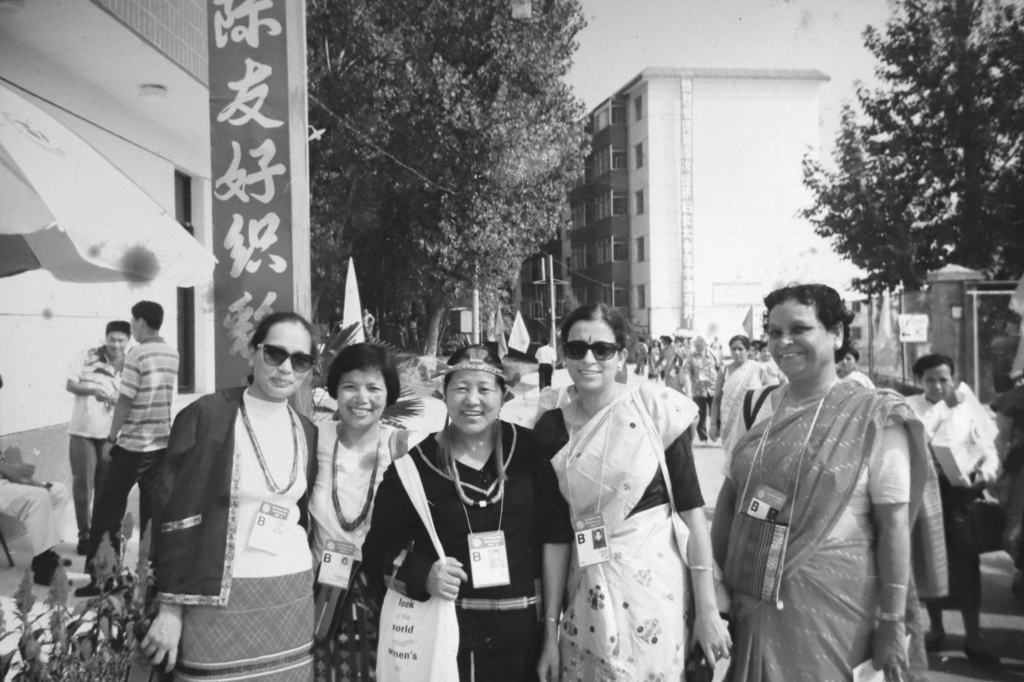

That conviction soon carried NEN beyond the region. The organisation became a conduit through which women from North East India could engage with international human rights frameworks — including the Convention on the Elimination of All Forms of Discrimination Against Women (CEDAW). For communities whose concerns had long been invisible in national policy, these processes offered a powerful new language, and a legitimate platform – ensuring public responsibility. NEN placed the women of the region firmly on a global landscape.
On 22nd March 1995, NEN was registered as an NGO in Guwahati, Assam, marking the beginning of a feminist movement grounded in solidarity, community engagement and women’s rights in the North East.
Over three decades, that conviction has never wavered.

Three States, One Movement
NEN’s work spans Assam, Meghalaya and Nagaland — three states with vastly different cultural, political and ecological contexts, united by a shared commitment to uphold women’s rights and gender justice.
In Meghalaya, NEN challenged the assumption that matrilineal societies are free from gender-based violence. Through partnerships with Dorbars, youth groups and women’s collectives, the organisation built community-level responses to violence that eventually saw the establishment of district level Women Support Centres. In 2011, sustained efforts led the Government of Meghalaya to recognise domestic violence as a public health issue, a landmark moment that gave rise to ‘Iohlynti’, a support centre for women at Shillong Civil Hospital, which later became the model for the North East region’s first One Stop Centres (OSC) for survivors of violence.
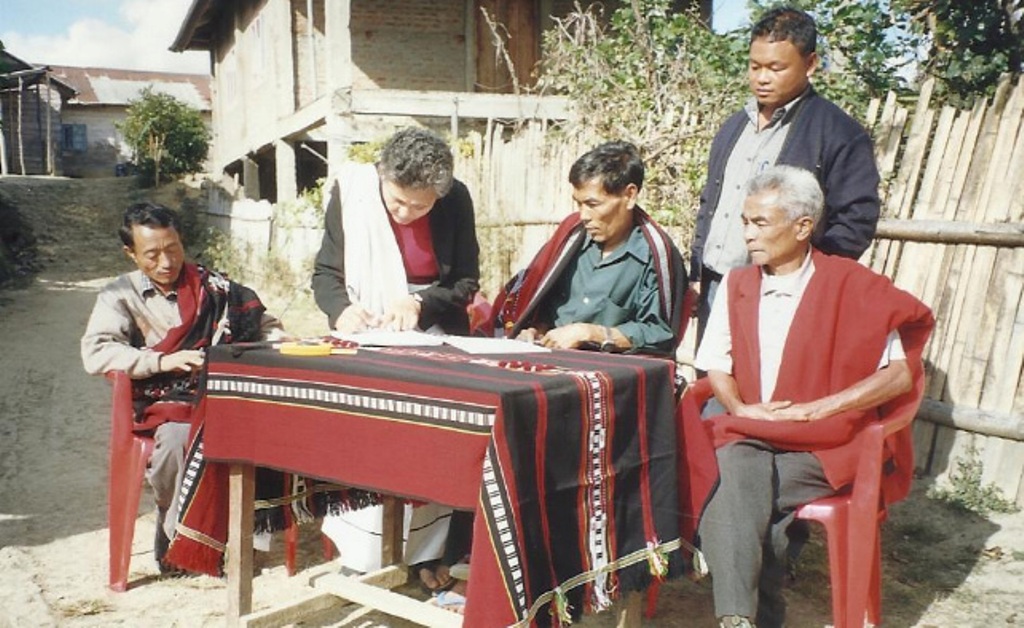
In Nagaland, NEN began with a health survey across seven districts in 1996–97, which brought the organisation to Chizami village in Phek district. Over the years, Chizami became the heart of NEN’s work in the state — a place where reproductive health, food security, livelihoods, weaving and women’s decision-making were understood not as separate issues, but as deeply connected threads of the same fabric. The Chizami Resource Centre, established in 2005 on land donated by a community member, stands today as a living symbol of NEN’s belief that transformation must emerge from within communities.
In Assam, NEN’s work tackled some of the most entrenched forms of gender-based violence in the region. Research, documentation and direct community engagement contributed to a pivotal policy outcome: NEN played a key role that led to the Assam Witch Hunting (Prohibition, Prevention and Protection) Act, 2015 — one of the most significant legislative wins for women’s rights in the state’s history. District-level women-led centres called the Gramin Mahila Kendra continue this work today, linking survivors to safety, livelihoods and feminist leadership.
A Legacy Written by Communities
NEN has never been an organisation that delivers programmes to communities. It is an organisation shaped by them. Across 30 years, it has brought the complexity of North East India’s realities — its matrilineal systems, customary land practices, armed conflict, ecological pressures and ethnic diversity — into the heart of India’s women’s rights discourse.
Today, generations of women leaders, farmers, weavers, survivors, youth, home based workers and grassroots activists carry this legacy forward. What began as a dream shared by two women walking from village to village has become a regional movement — one that continues to build feminist leadership, challenge injustice and insist that development, to mean anything, must be rooted in the voices of women.